
classera • 02 Apr 2026
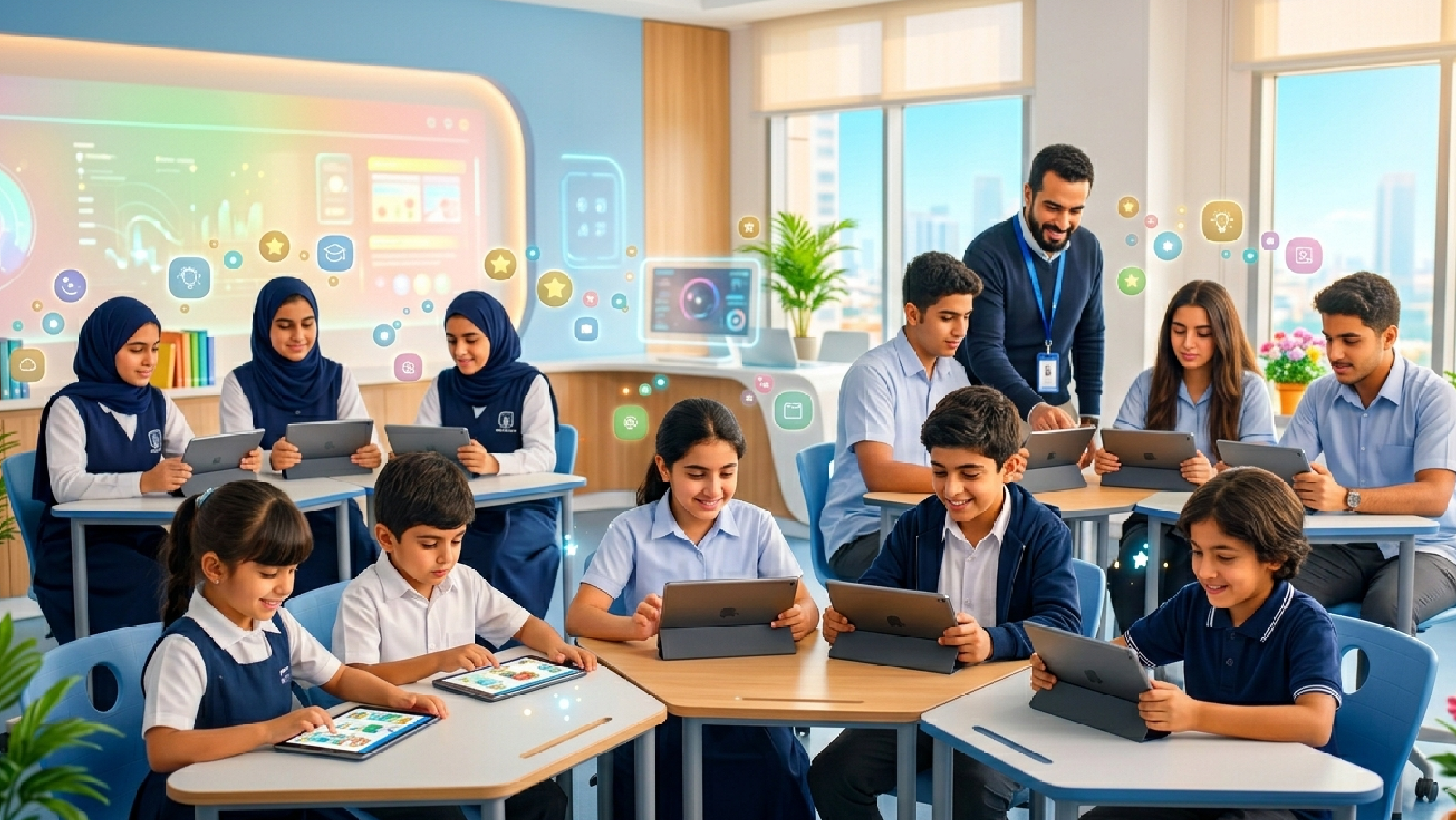
Among the most glaring shortcomings of traditional education is its reliance on a generalizing principle that has repeatedly proven to be fundamentally unfair. These systems assume that all students can learn in exactly the same way, absorb information at exactly the same pace, and therefore follow exactly the same academic path.
This assumption bears little resemblance to reality. Direct observation and scientific analysis of personality types and behavioral patterns consistently confirm what any honest educator already knows: our students are simply different from one another.
They differ in:
So how can we justify delivering:
— without acknowledging that something is fundamentally wrong?
The flaw becomes impossible to ignore once the gap reveals itself. Some students fall behind because the pace moves faster than they can follow. Others disengage entirely because the pace is too slow for the momentum they're ready to build. What we're left with are outcomes that don't reflect the true potential of any individual student.
Personalized Learning is an educational model built on adapting the content itself, the pace of delivery, and the method of instruction to fit the specific needs of each individual student.
It is distinct from:
Personalized Learning brings together:
For this model to be fully realized for each student, educational platforms must integrate several technical layers working in concert:
Layer 1: Data Collection
This layer captures the foundational signals that power everything else, including:
These data points form the bedrock of any system aspiring to be truly Data-Driven Education.
Layer 2: Learning Analytics
Using technologies such as Machine Learning and Predictive Analytics, this layer processes the collected data to:
Layer 3: Adaptive Learning Engines
The operational core of the entire system. These engines work automatically and in real time to:
All of this happens dynamically — continuously, and without delay.
Layer 4: Intelligent Tutoring Systems
These systems simulate the role of a teacher, providing:
|
Factor / Element |
Traditional Education |
Adaptive Learning |
|
Learning Path |
Fixed |
Dynamic |
|
Assessment |
Periodic — at long intervals |
Continuous — real-time |
|
Content |
Uniform for all |
Personalized per student |
|
Decision |
Human — subjective judgment |
Data-driven & indicator-based |
|
Outcome |
General |
Precise and individualized |
Because it consistently delivers:
1. Improved Learning Outcomes: Every student receives precisely what they need — no more, no less.
2. Reduced Educational Gaps: The system identifies weak points early, before they widen into lasting deficits.
3. Higher Engagement: Content calibrated to a student's actual level naturally draws them in and keeps them there.
4. Teacher Empowerment (Not Replacement): Smart tools support educators in making better, more informed decisions — rather than removing them from the equation.
Despite its clear advantages, deploying Personalized Learning at scale comes with real obstacles. The most significant include:
1. Data Volume: Real-time processing of vast amounts of student data demands robust infrastructure and computing power.
2. Model Accuracy: A single analytical error can generate an ill-suited learning path — making precision a non-negotiable requirement.
3. Curriculum Alignment: Personalization must remain compatible with official academic standards and the institution's broader educational vision.
4. User Experience: The system must maintain an intuitive, accessible interface for students and teachers alike — regardless of how complex the underlying logic becomes.
Within this landscape, solutions like XSERA — the AI-powered educational engine developed by Classera — represent a genuine leap forward. XSERA brings together:
All within a single unified system that connects every participant in the educational process — students, teachers, and administrators — with remarkable coherence and real-time synchronization. Each stakeholder is given a purpose-built interface that fits their specific role within the process.
As adaptive learning and artificial intelligence continue to mature, Personalized Learning is no longer a forward-looking aspiration — it's an immediate necessity.
We are moving away from a single educational model applied to everyone, toward an intelligent learning experience designed around each student's individual capabilities and needs.
This shift doesn't simply raise the efficiency of learning. It redefines what the educational experience itself can be.
The question is no longer whether personalized learning works. The question is: are we ready to fully embrace it?
 Customer service
